Startup Central Protecting Culture in Small Teams: How to Run Fair, Effective Investigations Even small startups encounter misconduct reports, and how you respond matters. This guide provides an 8-step investigation checklist, interview best practices, evidence preservation steps, and clear guidance on when to involve outside counsel.
Fundraising & Financial Regulation Your Practical Guide to Convertible Notes: Caps, Discounts, Dilution, and Legal Traps Founders are handed convertible notes labeled standard, but terms vary and reshape cap-table ownership. This guide covers principal, interest, caps, discounts, maturity, and conversion triggers with worked examples, plus the traps that catch founders who skip counsel.
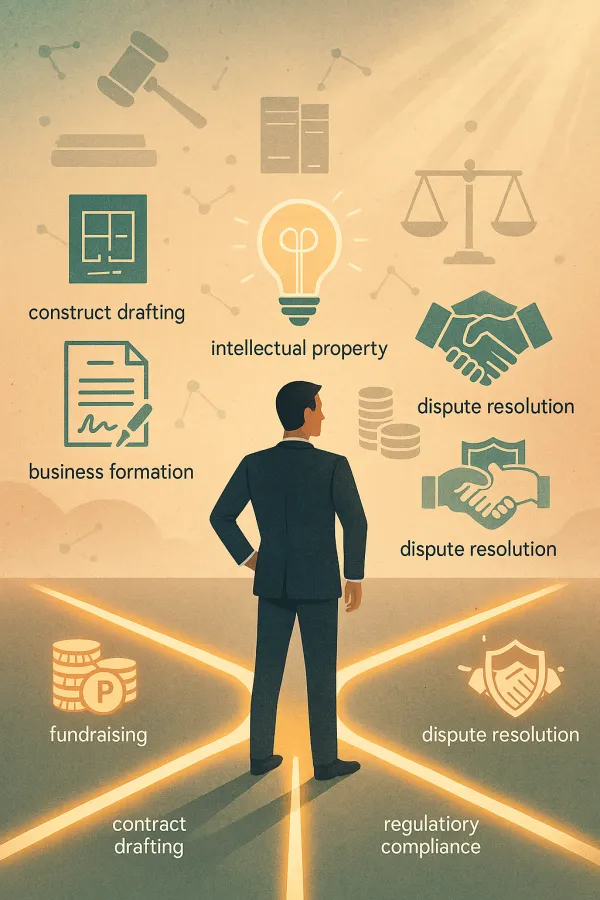
Startup Central How Strong Legal Foundations Boost Your Financial Outcomes (for Creatives, Entrepreneurs, Technologists, and Investors) Ignored legal basics cost real money: artists sign away masters, founders miss 83(b) elections, and acquirers discount messy cap tables. This guide shows how entity choice, IP assignments, contracts, and tax elections drive valuation and after-tax outcomes.
Intellectual Property & Branding Texas Quick Facts: Publicity Rights at a Glance Texas treats post-mortem publicity rights as transferable property under Chapter 26 with a 50-year term. For the living, common-law misappropriation applies. This guide covers statutes, case law, AI and deepfake considerations, and a compliance checklist.
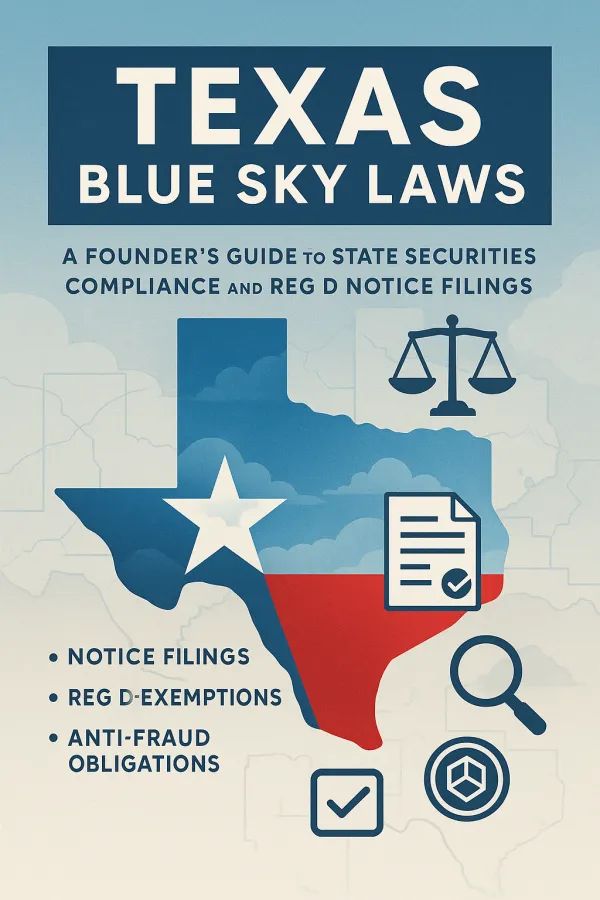
Startup Central Texas Blue Sky Law + NSMIA: A Founder’s Field Guide If you sell a security to a Texas resident, Texas law applies even under a federal exemption. NSMIA removes registration requirements for Rule 506, but Texas still requires notice filings and enforces anti-fraud rules. A decision framework for founders.
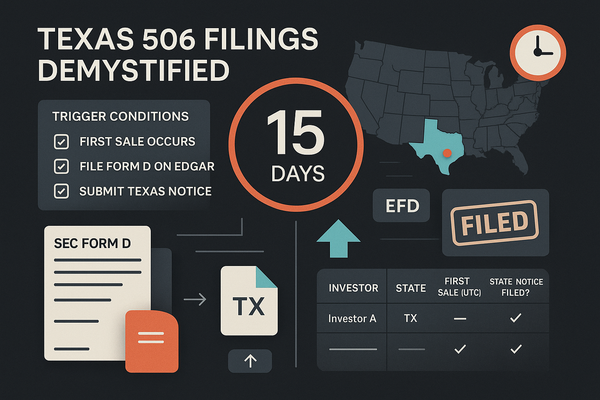
Fundraising & Financial Regulation Texas Rule 506 Notice Filings: Exact Steps, Timing, and Checklists Selling securities to a Texas resident under Rule 506 triggers a state notice filing through NASAA's EFD. This guide provides exact steps: filing triggers, what to submit, the EFD platform process, amendment procedures, and a master pre-to-post-closing checklist.
Startup Central Executing Your Raise in Texas: 506(b) vs 506(c), Advertising Hygiene, Finders, Integration, and Real‑World Scenarios Choosing between 506(b) and 506(c) determines how you market your raise and verify investors in Texas. This guide covers advertising hygiene, finder risk, integration sequencing under Rule 152, and real-world scenarios for common raise structures.
Regulatory Compliance & Legal Risk Management The Complete AI Governance Playbook for 2025: Transforming Legal Mandates into Operational Excellence AI governance has shifted from optional to required for fundraising, enterprise sales, and regulatory compliance. This playbook transforms legal mandates into operational controls: risk matrices, policy templates, vendor checklists, and audit-ready documentation.
Technology, AI, & Digital Innovation What Makes Knowledge Graphs More Efficient Than a Traditional Database Traditional databases struggle with multi-hop relationship queries that knowledge graphs handle natively. By storing data as nodes and edges, knowledge graphs enable faster traversal, schema-free flexibility, and inference that reveals hidden patterns.
Fundraising & Financial Regulation What Is a Secondary Sale for Startups and Businesses Secondary sales allow founders, investors, and employees to sell existing shares to new buyers without waiting for an IPO. These transactions provide liquidity and validate valuations, but involve securities compliance and contractual restrictions requiring legal counsel.
Startup Central What Is Contract Payment for Startups and Businesses The payment terms in your contracts determine when cash arrives and how risk is shared. This guide covers lump-sum, milestone, recurring, and escrow structures, explains how each affects cash flow, and outlines the legal considerations for enforceable payment clauses.
Business Formation & Corporate Governance Texas Series LLC Operating Agreement for Startups and Businesses A Texas Series LLC lets entrepreneurs operate multiple business lines under one entity while keeping each series' assets and liabilities separate. This guide covers governance structure, asset segregation, compliance, and why counsel is critical for the liability shield.
Fundraising & Financial Regulation What Is a Convertible Note for Startups and Businesses Convertible notes let startups raise capital by issuing short-term debt that converts into equity during a future funding round. This guide covers valuation caps, discount rates, and maturity dates, and explains why legal counsel is critical to drafting compliant agreements.
Fundraising & Financial Regulation Demystifying Term Sheets: How Lawyers Empower Startups and Businesses Term sheets outline valuation, equity stakes, and investor rights before binding contracts are drafted. This guide breaks down key elements, explains how lawyers negotiate favorable terms, and shares best practices for entrepreneurs entering funding discussions.
Startup Central Stocks vs. Options: Why Legal Guidance Matters for Startups and Businesses Choosing between issuing stocks and granting stock options affects ownership, taxation, and retention. This article compares both instruments, highlights regulatory pitfalls under IRC Section 409A, and explains how a startup lawyer structures equity compensation to align incentives with growth.
Startup Central Startup Law Firms: Empowering Your Business with Specialized Legal Expertise Startup law firms focus on the legal challenges facing early-stage companies, from entity selection and IP protection to fundraising and regulatory compliance. Research shows startups with dedicated legal support are more likely to reach funding milestones and avoid costly disputes.
Startup Central Startup Company Lawyer: Your Strategic Partner in Building a Resilient Business A startup company lawyer guides founders through entity structuring, IP protection, fundraising, and regulatory compliance. Studies show startups that secure IP protections are up to 10x more likely to obtain funding. Early legal engagement builds resilience from day one.
Startup Central Launching a Search Fund: How Startups Can Leverage Legal Expertise for Success Search funds offer a structured path to acquiring an established business. With 63% of search funds completing acquisitions, legal counsel plays a critical role in capital raising, due diligence, contract negotiation, and post-acquisition integration to protect all stakeholders.
Startup Central Special Limited Warranty Deeds for Startups: Secure Your Assets with Expert Legal Guidance Special limited warranty deeds guarantee a property title only during the seller's ownership period. For startups acquiring commercial space, thorough title searches, legal due diligence, and careful contract negotiation are essential to protect the investment from historical defects.
Fundraising & Financial Regulation Seed Investments for Startups: Unlocking Early-Stage Growth with Legal Expertise Seed investments provide the capital startups need to validate products and refine business models. This guide covers term sheets, convertible instruments, and liquidation preferences, explaining how legal counsel helps founders negotiate favorable terms and stay compliant.
Startup Central Identifying the "Schmuck Point" in Startups: Critical Junctures and the Role of Legal Counsel The 'Schmuck Point' marks the phase when a startup's informal processes can no longer support growth. Without standardized agreements and clear governance, founders face equity disputes and investor hesitancy. Legal counsel turns this vulnerability into structured opportunity.
Fundraising & Financial Regulation Qualified Financing for Startups and Businesses Qualified financing rounds meet thresholds that trigger conversion of early-stage instruments into equity. Legal counsel ensures documentation is precise, regulatory requirements are met, and deal structures align with long-term growth objectives to strengthen investor confidence.
Fundraising & Financial Regulation SAFEs vs. Convertible Notes for Startups: Legal Insights to Fuel Smart Fundraising SAFEs and convertible notes both raise capital without immediate valuation, but differ in structure, risk, and protections. This comparison covers interest, maturity, conversion mechanics, and compliance to help founders choose the right instrument for their stage.
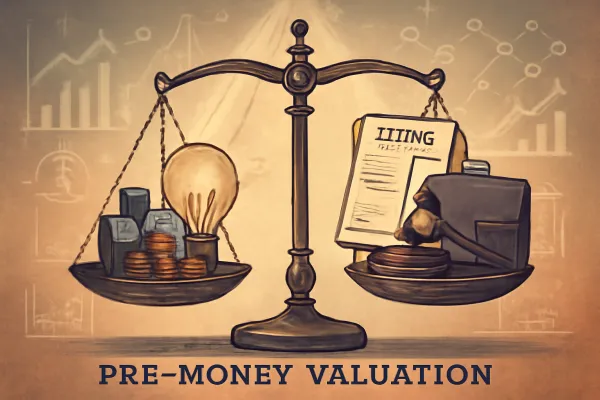
Fundraising & Financial Regulation Pre-Money Valuation for Startups: Maximizing Value with Expert Legal Guidance Pre-money valuation determines a startup's worth before new capital enters, affecting equity distribution and investor terms. This guide covers DCF and comparable company methods, and explains how legal counsel structures deals and prevents post-funding disputes.
Startup Central Outstanding Shares Definition for Startups and Businesses: Leveraging Legal Expertise Outstanding shares represent all issued stock held by shareholders and directly affect EPS, market capitalization, and ownership control. Managing share counts through proper documentation, regulatory compliance, and strategic planning is essential to attract investors and prevent disputes.