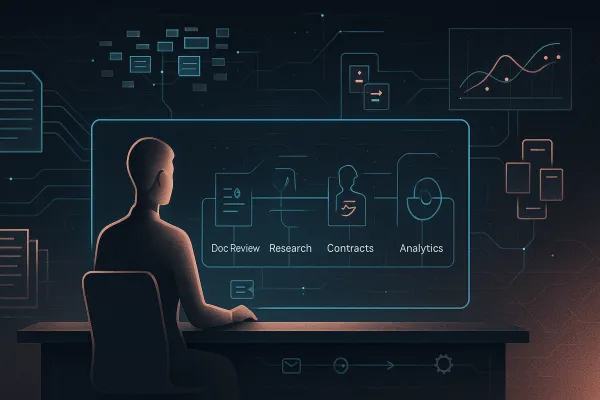
Legal Tech & Automation Why LLMs matter for legal work when designed around outcomes Many early AI pilots in legal stall for predictable reasons: models hallucinate, outputs sound confident but miss the point, or adoption collapses after the demo. The difference is outcome-driven design—building LLM integration around measurable legal results.
Startup Central When and How to Build an Effective Startup Advisory Board An advisory board works when it solves a specific constraint, not when it fills a vanity list. This guide covers when to add advisors, typical equity ranges, agreement structure with vesting and IP terms, and governance practices for productive relationships.
Guides, Reviews & Commentary Understanding Label Advances and Recoupment: What Recording Artists Actually Owe Most artists misunderstand how label advances work. Advances are pre-payments against future royalties, not personal loans. This guide covers recoupment mechanics, cross-collateralization traps, royalty calculations, and the contract clauses that control back-end pay.
Startup Central 4-Year Vesting with a 1-Year Cliff: A Practical Guide for Startup Founders and Early Employees Four-year vesting with a one-year cliff is the standard equity structure for founders, employees, and advisors. This guide explains how schedules work, what triggers acceleration, and how to negotiate cliff length and exercise windows.
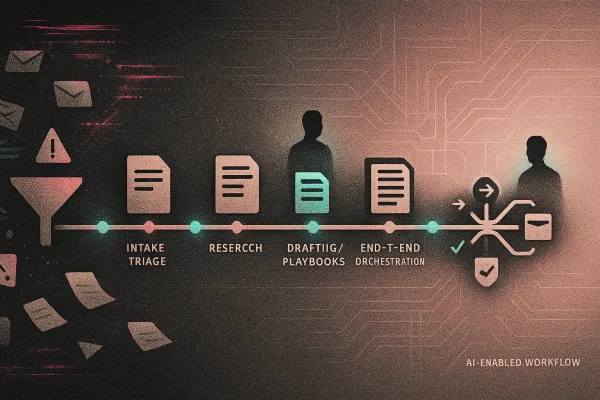
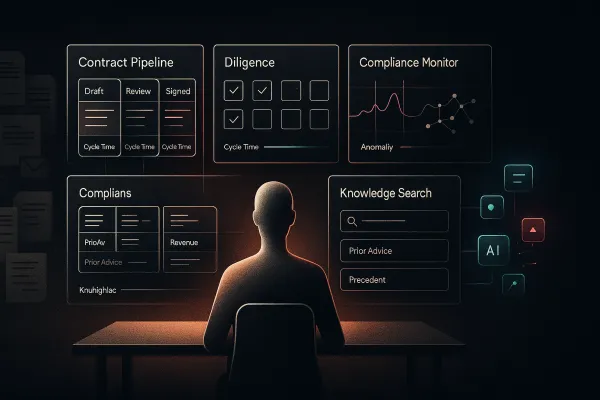
Legal Tech & Automation AI Workflows in Legal Practice: A Practical Transformation Guide Legal work is shifting from manual, email-driven practice to workflow-driven, AI-assisted operations. This transformation guide covers intake, extraction, triage, and review—with a framework for moving from scattered tools to connected workflows.
Startup Central Know What a “Healthy” Cap Table Actually Looks Like Investors evaluate cap-table health before writing checks. A healthy table shows balanced founder ownership, a properly sized option pool, and clean records. This guide defines what good looks like at each stage and flags common red flags.
Guides, Reviews & Commentary What Are Presumed Damages? Meaning, Examples, and How to Respond Presumed damages allow courts to award compensation without requiring proof of exact financial losses. They arise in defamation, privacy violations, and statutory claims. This guide explains when they apply and what startups should know about litigation exposure.
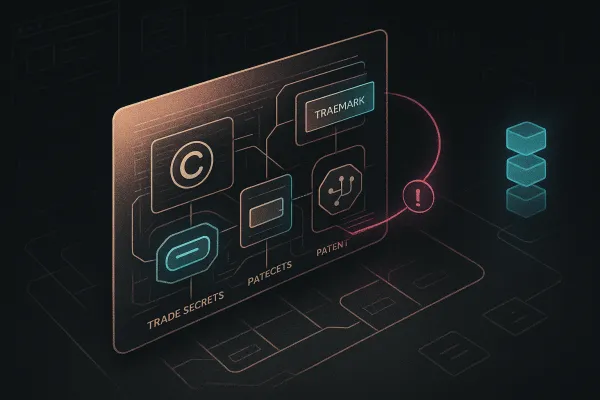
Intellectual Property & Branding Intellectual Property Violations Explained: How to Identify, Respond, and Enforce Your IP IP violations range from trademark infringement to trade-secret misappropriation and copyright claims. Each carries different enforcement mechanisms and damages. This guide explains the major categories and the legal steps startups should take to protect their IP.
Startup Central Indemnification Clauses Explained: How Indemnity Works in Contracts (With Examples) Indemnification clauses determine who pays when something goes wrong under a contract. This guide breaks down how indemnity works, the difference between mutual and one-way terms, common negotiation points, and red flags to catch before signing.
AI Law Start With a Human-First AI Strategy for Dealmaking AI tools compress M&A timelines by automating document review and flagging contract risks. But negotiation, relationships, and strategic decisions still need human judgment. This guide presents a framework for integrating AI into your deal process.
Startup Central Accounting Service Agreements: A Practical Checklist for Startups and Small Businesses Hiring an accounting firm without a clear service agreement leads to scope disputes, missed deadlines, and unclear liability. This checklist covers essential terms: scope, deliverable timelines, data access, fee structures, liability caps, and termination rights.
Legal Tech & Automation From AI Tools to AI Workflows: How Law Firms Can Actually Improve Margins Law firms face acute margin pressure: flat fees, client cost sensitivity, and tight talent pools. Buying point tools won't fix that unless workflows are redesigned. This piece maps how connected workflows across intake, research, and billing drive real returns.
Intellectual Property & Branding Licensing Your Characters to Generative AI Platforms: A Legal & Governance Checklist for Studios and AI Companies Generative AI platforms want to use characters and likenesses in ways traditional licensing never anticipated. Rights holders need contracts addressing training-data use, output ownership, quality control, and takedown rights. This checklist covers the key terms.
Legal Tech & Automation Stop Buying Legal AI Tools. Start Designing Workflows That Save Money Firms and in-house legal teams face severe margin pressure, and buying point tools without defined workflows, governance, and human-review gates just adds cost without moving the needle. This guide reframes the approach around workflow design first.
Technology, AI, & Digital Innovation Featured Why Your Lawyer Must Actually Understand Technology (and What TRAIGA Gets Wrong) AI statutes land on top of running products, data pipelines, and engineering roadmaps. When a law like TRAIGA defines an 'automated decision system,' it maps onto real software—and lawyers who can't read that mapping create more risk than they manage.
Startup Central Startup Offer Letter Templates with Equity: A Practical Guide for Founders and Counsel An offer letter with equity is often the first legal document a new hire sees. Vague language around vesting, exercise windows, and tax treatment creates disputes. This guide covers what every offer letter should include and common drafting mistakes to avoid.
Legal Tech & Automation Why AI Efficiency Matters for Law Firms Now AI is already reshaping how legal work gets done—especially in document-heavy practices like litigation, due diligence, and contract work. Firms are discovering that efficiency gains protect margins without requiring cuts to service quality.
Technology, AI, & Digital Innovation Introduction – Why Legal Data Science Matters Right Now For fast-moving companies, legal work has become a bottleneck: slow contracts, scattered obligations, and reactive lawyering stall sales and fundraising. Data science gives legal teams the tools to move from reactive to strategic.
Startup Central Issued vs. Outstanding vs. Fully Diluted: The Plain-English Guide Every Founder Needs Mixing up share counts leads to mispriced equity grants, broken promises, and expensive pre-financing cleanups. This guide uses a running example with real math to explain each term, show how they appear on your cap table, and flag common founder mistakes.
Guides, Reviews & Commentary Why Startups Need Legal Expertise for SLAs: Drafting, Review, and Negotiation Checklist Accepting vendor SLA boilerplate as standard leaves startups without recourse during outages. Legal review converts vague targets into enforceable SLOs and secures meaningful remedies and data exit rights. Use this checklist to prioritize the clauses that matter.
Fundraising & Financial Regulation How to Lock Down a Fundraising Consultant’s Scope: The Contract Language That Protects Your Cash and Cap Table Paying a fundraising consultant without precise scope language invites disputes over fees, credit for introductions, and potential broker-dealer liability. This guide shows how to convert promises into measurable contract obligations and limit authority.
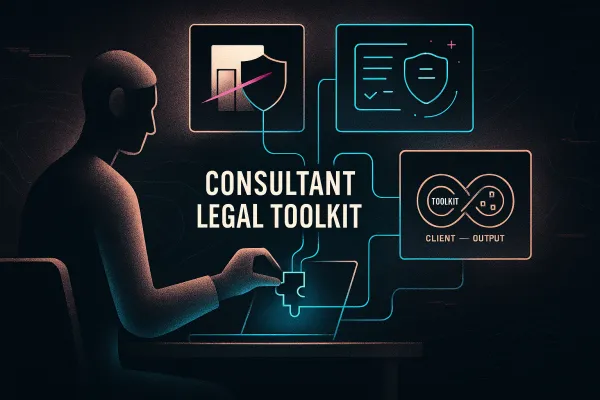
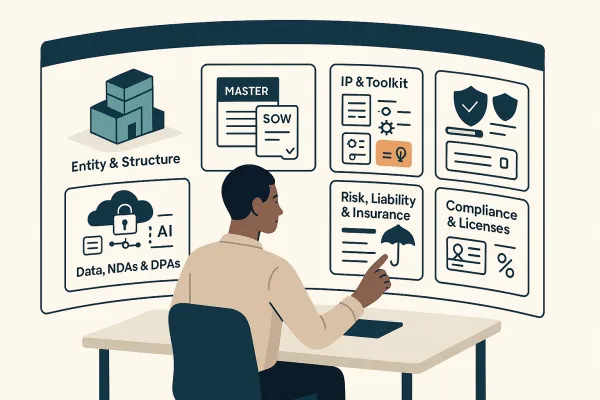
Business Formation & Corporate Governance The Consultant’s Legal Playbook: Four Pillars to Protect Your Business, IP, and Income Operating as a consultant without legal foundations creates predictable problems: personal liability, unpaid invoices, lost IP, and scope disputes. This playbook covers entity formation, MSA design, IP carve-outs, and risk management through insurance and contracts.
Startup Central The Consultant’s Legal Checklist: Formation, Contracts, IP & Risk Management (With Service Agreement Tips) Many consultants launch with DIY documents and face disputes over scope, fees, and IP ownership. This checklist provides steps for entity formation, MSA and SOW design, IP carve-outs, data compliance, liability caps, and insurance alignment.
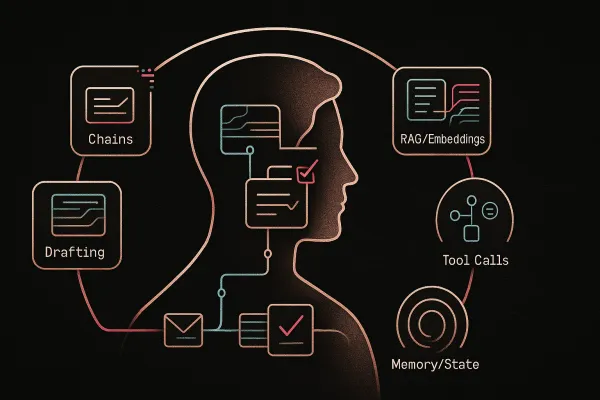
Legal Tech & Automation Why AI Feels So Much Smarter Now: A Practical Playbook for Lawyers on Tools, Workflows, and Not Just Models Lawyers are seeing AI move from 'neat demo' to day-to-day usefulness—faster drafting, smarter search, better triage. The shift isn't just bigger models; it's better tooling, workflow design, and integration patterns. A playbook for moving past the demo stage.
Startup Central How Strong Legal Foundations Boost Your Financial Outcomes (for Creatives, Entrepreneurs, Technologists, and Investors) Ignored legal basics cost real money: artists sign away masters, founders miss 83(b) elections, and acquirers discount messy cap tables. This guide shows how entity choice, IP assignments, contracts, and tax elections drive valuation and after-tax outcomes.