Legal Tech & Automation Legal Strategy, Quantified: Using Data and AI to Scale Risk Management Legal risk does not have to be a black box. By applying data and AI to contract analysis, compliance tracking, and litigation exposure, startups can quantify risk and allocate resources with the same rigor they apply to engineering or sales.
Intellectual Property & Branding Licensing Your Characters to Generative AI Platforms: A Legal & Governance Checklist for Studios and AI Companies Generative AI platforms want to use characters and likenesses in ways traditional licensing never anticipated. Rights holders need contracts addressing training-data use, output ownership, quality control, and takedown rights. This checklist covers the key terms.
Trademark Why modern businesses need a deliberate trademark and brand protection strategy A trademark is only as strong as the strategy behind it. Brand protection goes beyond filing applications; it requires monitoring, enforcement, and alignment with business goals. This guide explains how to build a strategy that scales across markets and channels.
Intellectual Property & Branding Why trademark lifespan and renewals matter for serious brands A trademark registration is not permanent. Missing renewal deadlines or failing to prove continued use can cancel your mark. This guide covers the U.S. maintenance timeline, required filings at each stage, and the enforcement steps that keep protection intact.
Startup Central The Startup Guide to Domain Name Trademarks: How to Pick, Clear, Register, and Defend Your Core Domains Choosing a domain name without checking trademark availability is a costly startup mistake. This guide explains how domains and trademarks overlap, when a domain qualifies for protection, how to handle disputes, and the steps to secure your brand online.
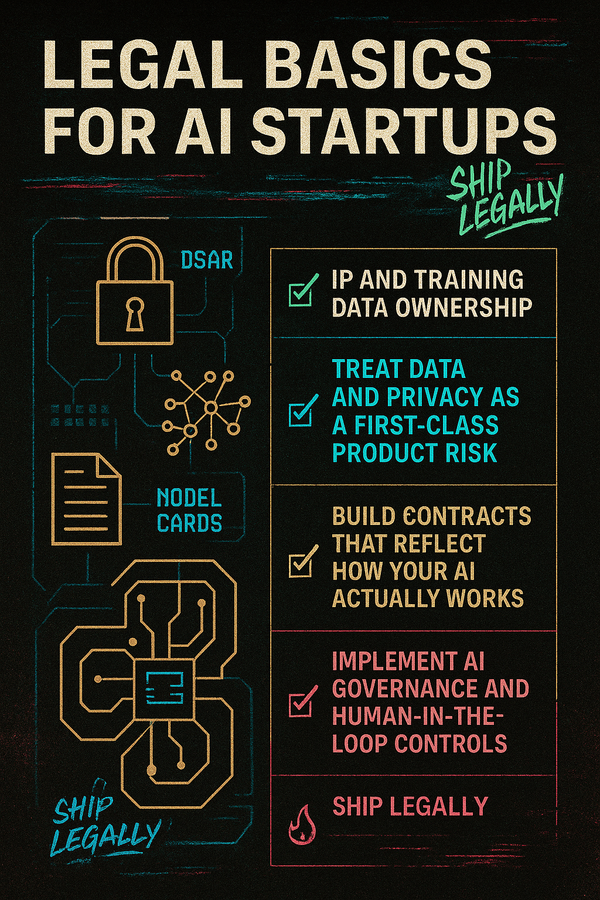
AI Law The Non-Negotiable Legal Basics for AI Startups AI startups that skip foundational legal work face IP disputes, regulatory enforcement, and deal friction. This guide covers training-data rights, model ownership, privacy compliance, vendor contract terms, and lightweight governance frameworks every AI company needs.
Digital Presence & Online Policies Why FTC Endorsement Rules Matter for Startups The FTC enforces endorsement and testimonial rules against companies of all sizes. Startups using influencer marketing or affiliate programs must comply with disclosure requirements or face fines. This guide covers what the rules require and how to build compliant practices.
Startup Central Startup Offer Letter Templates with Equity: A Practical Guide for Founders and Counsel An offer letter with equity is often the first legal document a new hire sees. Vague language around vesting, exercise windows, and tax treatment creates disputes. This guide covers what every offer letter should include and common drafting mistakes to avoid.
Startup Central Carta Cap Tables for Startups and Businesses: What Software Solves — and Why Legal Counsel Still Matters Carta is the default cap-table platform for many startups, but misconfigured share classes and outdated records undermine its value. This guide covers setup best practices, common data-entry mistakes, and when to involve legal counsel to validate your table.
Intellectual Property & Branding How Long Do Trademarks Last? Lifespan, Renewal Timeline, and Consequences of Missing a Deadline (US Guide) A U.S. trademark registration can last forever if you file the right maintenance documents on time and continue using the mark. This guide explains the renewal timeline, Section 8 and 9 filings, grace periods, and what happens when a mark lapses.
Intellectual Property & Branding Turn Trademark Protection into a Repeatable System and Quick‑start Checklist Ad hoc trademark protection breaks down as your portfolio grows. This guide shows how to build a repeatable system for clearance searches, filing strategy, infringement monitoring, and enforcement that reduces cost and catches threats earlier.
Startup Central Issued vs. Outstanding vs. Fully Diluted: The Plain-English Guide Every Founder Needs Mixing up share counts leads to mispriced equity grants, broken promises, and expensive pre-financing cleanups. This guide uses a running example with real math to explain each term, show how they appear on your cap table, and flag common founder mistakes.
Guides, Reviews & Commentary Why Startups Need Legal Expertise for SLAs: Drafting, Review, and Negotiation Checklist Accepting vendor SLA boilerplate as standard leaves startups without recourse during outages. Legal review converts vague targets into enforceable SLOs and secures meaningful remedies and data exit rights. Use this checklist to prioritize the clauses that matter.
Fundraising & Financial Regulation How to Lock Down a Fundraising Consultant’s Scope: The Contract Language That Protects Your Cash and Cap Table Paying a fundraising consultant without precise scope language invites disputes over fees, credit for introductions, and potential broker-dealer liability. This guide shows how to convert promises into measurable contract obligations and limit authority.
Business Formation & Corporate Governance The Consultant’s Legal Playbook: Four Pillars to Protect Your Business, IP, and Income Operating as a consultant without legal foundations creates predictable problems: personal liability, unpaid invoices, lost IP, and scope disputes. This playbook covers entity formation, MSA design, IP carve-outs, and risk management through insurance and contracts.
Fundraising & Financial Regulation The “Friendly” Angel Term Sheet That Can Kill Your Next Round: A Legal Playbook for Clean Raises A mentor-recommended angel term sheet can still contain vetoes or stacked conversion terms that block your Series A. This guide walks founders through pre-raise strategy, instrument selection, term-sheet red flags, and governance safeguards for clean raises.
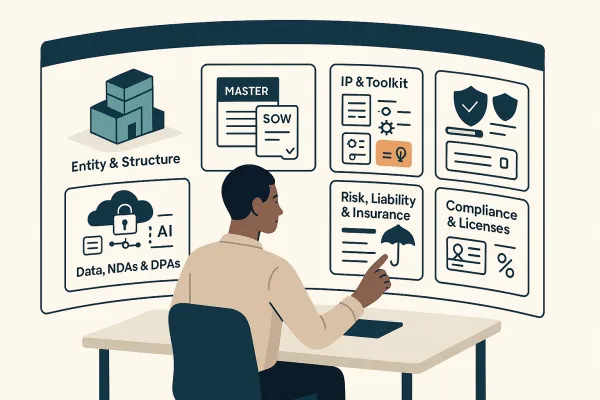
Startup Central The Consultant’s Legal Checklist: Formation, Contracts, IP & Risk Management (With Service Agreement Tips) Many consultants launch with DIY documents and face disputes over scope, fees, and IP ownership. This checklist provides steps for entity formation, MSA and SOW design, IP carve-outs, data compliance, liability caps, and insurance alignment.
Technology, AI, & Digital Innovation The 5 Legal Moves Every AI Startup Should Make This Quarter Spend one hour this quarter on these five legal moves: inventory AI use cases, assign a governance owner, ship a minimum viable policy stack, standardize LLM vendor contracts, and build a one-page regulatory map. Each step cuts deal friction and product risk.
Technology, AI, & Digital Innovation The AI Legal Playbook for Austin Manufacturing Startups: Future Risks You Can Tackle Now AI on the factory floor brings legal risk most manufacturing startups are not prepared for: safety liability, IP disputes over AI-generated designs, worker-monitoring rules, and weak vendor contracts. This playbook provides concrete steps to address each risk.
Startup Central Loot Boxes & the Law: A Compliance Playbook for Gaming Startups Loot boxes mix money, chance, and often minors, creating concentrated legal exposure. This playbook gives gaming founders a risk framework, jurisdictional red-flag map, product design safeguards, and a pre-launch compliance checklist to reduce legal risk.
Startup Central Protecting Culture in Small Teams: How to Run Fair, Effective Investigations Even small startups encounter misconduct reports, and how you respond matters. This guide provides an 8-step investigation checklist, interview best practices, evidence preservation steps, and clear guidance on when to involve outside counsel.
Fundraising & Financial Regulation Your Practical Guide to Convertible Notes: Caps, Discounts, Dilution, and Legal Traps Founders are handed convertible notes labeled standard, but terms vary and reshape cap-table ownership. This guide covers principal, interest, caps, discounts, maturity, and conversion triggers with worked examples, plus the traps that catch founders who skip counsel.
Startup Central How Strong Legal Foundations Boost Your Financial Outcomes (for Creatives, Entrepreneurs, Technologists, and Investors) Ignored legal basics cost real money: artists sign away masters, founders miss 83(b) elections, and acquirers discount messy cap tables. This guide shows how entity choice, IP assignments, contracts, and tax elections drive valuation and after-tax outcomes.
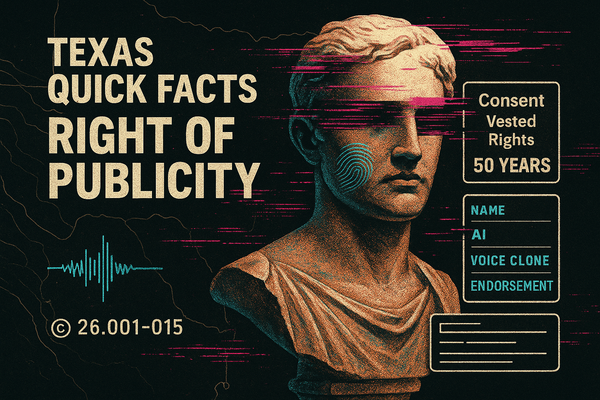
Intellectual Property & Branding Texas Quick Facts: Publicity Rights at a Glance Texas treats post-mortem publicity rights as transferable property under Chapter 26 with a 50-year term. For the living, common-law misappropriation applies. This guide covers statutes, case law, AI and deepfake considerations, and a compliance checklist.
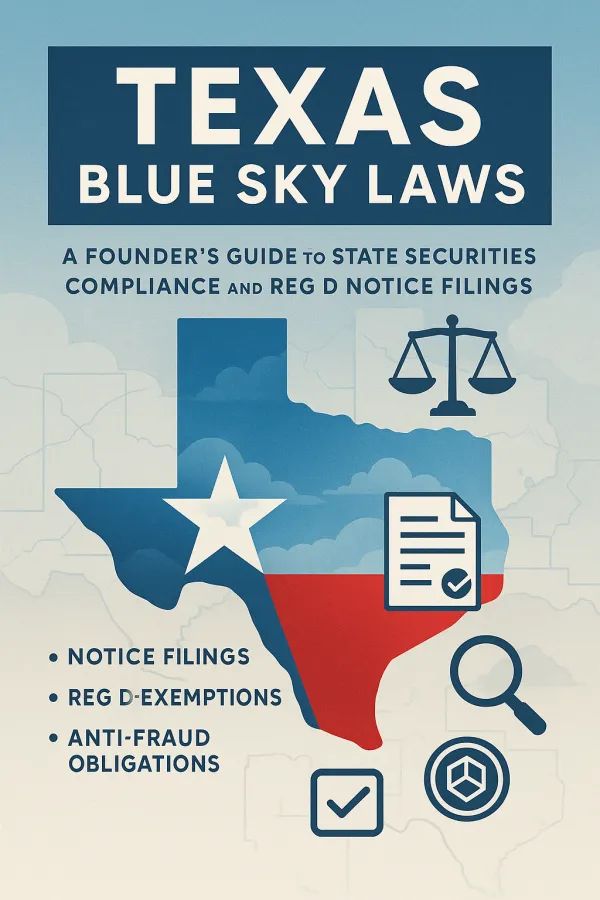
Startup Central Texas Blue Sky Law + NSMIA: A Founder’s Field Guide If you sell a security to a Texas resident, Texas law applies even under a federal exemption. NSMIA removes registration requirements for Rule 506, but Texas still requires notice filings and enforces anti-fraud rules. A decision framework for founders.