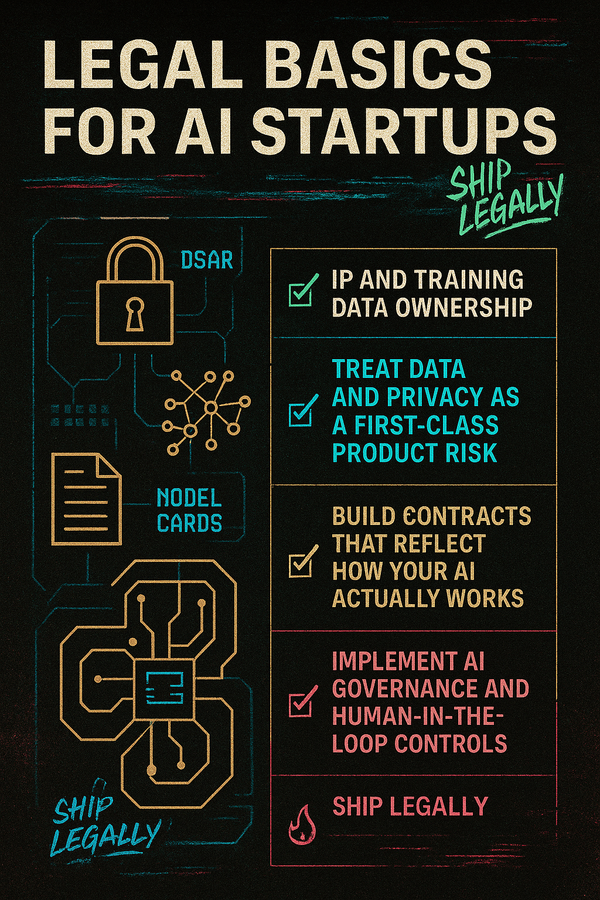
AI Law The Non-Negotiable Legal Basics for AI Startups AI startups that skip foundational legal work face IP disputes, regulatory enforcement, and deal friction. This guide covers training-data rights, model ownership, privacy compliance, vendor contract terms, and lightweight governance frameworks every AI company needs.
Startup Central Carta Cap Tables for Startups and Businesses: What Software Solves — and Why Legal Counsel Still Matters Carta is the default cap-table platform for many startups, but misconfigured share classes and outdated records undermine its value. This guide covers setup best practices, common data-entry mistakes, and when to involve legal counsel to validate your table.
Legal Tech & Automation Why AI Efficiency Matters for Law Firms Now AI is already reshaping how legal work gets done—especially in document-heavy practices like litigation, due diligence, and contract work. Firms are discovering that efficiency gains protect margins without requiring cuts to service quality.
Technology, AI, & Digital Innovation Introduction – Why Legal Data Science Matters Right Now For fast-moving companies, legal work has become a bottleneck: slow contracts, scattered obligations, and reactive lawyering stall sales and fundraising. Data science gives legal teams the tools to move from reactive to strategic.
Legal Tech & Automation How OAuth 2.0 Makes Gmail Integrations Safer (and Keeps Users in Control) Teams routinely connect third-party tools—n8n workflows, CRMs, AI drafting assistants—to Gmail. The security problem: people often use stored passwords or app-specific credentials. OAuth 2.0 replaces that with scoped tokens that keep users in control.
Legal Tech & Automation Why AI Feels So Much Smarter Now: A Practical Playbook for Lawyers on Tools, Workflows, and Not Just Models Lawyers are seeing AI move from 'neat demo' to day-to-day usefulness—faster drafting, smarter search, better triage. The shift isn't just bigger models; it's better tooling, workflow design, and integration patterns. A playbook for moving past the demo stage.
Startup Central Identifying the "Schmuck Point" in Startups: Critical Junctures and the Role of Legal Counsel The 'Schmuck Point' marks the phase when a startup's informal processes can no longer support growth. Without standardized agreements and clear governance, founders face equity disputes and investor hesitancy. Legal counsel turns this vulnerability into structured opportunity.
Legal Tech & Automation Legal Tech Courses for Startups and Businesses Legal technology courses help startup teams master contract automation, AI-powered research, and compliance monitoring. By building internal legal tech capabilities, startups reduce outside counsel costs, improve efficiency, and maintain stronger regulatory compliance.
Legal Tech & Automation Legal Tech Courses for Startups and Businesses Investing in legal technology education gives startups a competitive edge by enabling teams to handle routine legal tasks in-house. From document automation to AI-driven compliance tools, these courses build capabilities to manage legal workflows efficiently.
Startup Central Legal Fees for Startups and Businesses Legal fees are unavoidable for startups, but understanding typical costs for entity formation, trademarks, contract drafting, and fundraising helps founders budget effectively. This guide covers common fee structures and strategies for managing legal spend at each growth stage.
Startup Central Lawyer Startup for Startups and Businesses Every startup needs legal guidance, but knowing when to hire and what to prioritize matters. This guide explains how startup-focused lawyers support founders through entity selection, equity structuring, IP filings, and investor negotiations for scalable growth.
AI Law Lawyers Using AI for Startups and Businesses Lawyers using AI tools review contracts, conduct research, and monitor regulatory changes faster and more accurately than traditional methods. For startups on tight budgets, AI-augmented legal counsel reduces costs, improves accuracy, and ensures compliance without sacrificing strategic depth.
AI Law Law Firms Using Artificial Intelligence for Startups and Businesses Law firms integrating AI automate document review, accelerate research, and provide predictive litigation analytics. For startups, this means lower legal costs, faster turnaround on filings, and data-driven strategies that align legal counsel with business growth.
Startup Central Law Firm Intelligence for Startups and Businesses Law firm intelligence platforms provide data on attorney performance, billing benchmarks, and case outcomes. Founders can make informed decisions about counsel selection, negotiate better fees, and align legal strategy with measurable business outcomes.
Startup Central The Future in Law for Startups and Businesses: How a Lawyer Can Propel Innovation and Ensure Compliance The legal industry is evolving with AI-powered research, automated contract review, and alternative fee structures that make counsel more accessible to startups. Legal innovation helps early-stage companies reduce costs, improve compliance, and build scalable legal infrastructure.
AI Law Data Science for Lawyers: Empowering Startups and Businesses with Informed Legal Strategies Data science transforms legal practice with predictive analytics for litigation outcomes, automated contract analysis, and evidence-based risk assessment. Lawyers who leverage these tools provide startups with more accurate, cost-effective counsel aligned to business performance.
AI Law Attorney Technology for Startups and Businesses: Bridging Innovation with Expert Legal Guidance Attorney technology platforms automate document generation, streamline case management, and accelerate research. Contract automation can reduce drafting times by 80%. While these tools improve efficiency, human lawyers remain essential for strategy, ethics, and complex legal decisions.
AI Law Harnessing Artificial Intelligence in Legal Services for Startups and Businesses: How Lawyers Enhance the Digital Revolution AI-powered legal tools automate up to 70% of routine tasks, reduce document drafting time by 90%, and save companies millions. For startups, combining AI efficiency with human legal judgment delivers faster, more accurate counsel at a fraction of traditional costs.
AI Law AI Law Firms: Transforming Legal Services for Startups and Businesses with Expert Legal Guidance AI law firms use machine learning, NLP, and predictive analytics to achieve cost reductions of up to 30% and faster document review. Startups gain affordable access to compliance monitoring, contract analysis, and litigation risk assessment without sacrificing quality.
AI Law Leveraging AI in Law: Empowering Startups and Businesses with Legal Expertise AI is reshaping how startups handle legal work, from contract review to compliance tracking. But algorithms alone cannot replace strategic counsel. This guide shows how combining AI efficiency with experienced attorneys delivers faster results, lower costs, and better outcomes.
AI Law Harnessing AI in Legal: How Lawyers Empower Startups and Businesses AI platforms handle document review, research, and compliance at scale, but strategy and ethical oversight require human expertise. This article shows startups how a hybrid approach pairs automated efficiency with the judgment of experienced legal professionals.
AI Law Enhancing Legal Services: How AI Tools Empower Lawyers for Startups and Businesses Legal AI platforms deliver measurable gains: faster research, automated contract analysis, and real-time compliance monitoring. For startups, these tools lower the cost of quality legal support while freeing attorneys to focus on strategy and complex matters.
Startup Central What Happens When Law Firms Put People First? Lessons from Real Tech-Centered Approaches Tech founders often view lawyers as an expense rather than a partner. People-first firms change that by prioritizing long-term relationships, proactive guidance, and deep understanding of each client's business. This article draws lessons from firms serving technology companies.
AI Law AI Lawyers & Human Expertise: A Winning Legal Combination for Startups and Businesses AI handles document review, contract drafting, and compliance checks at speed. Human lawyers provide strategy, ethical judgment, and advocacy. Together, they form a legal model that gives startups enterprise-grade capability at a fraction of the traditional cost.
AI Law Revolutionizing Legal Support: How AI Legal Advice and Lawyers Empower Startups and Businesses AI legal platforms scan case law, flag contract risks, and monitor regulatory changes in real time. For resource-constrained startups, this is transformative. This guide explains how founders integrate AI tools with professional counsel to build a legal function that scales.