Privacy Law OpenAI Data Practices & Confidentiality Risk: A Lawyer's Checklist for Cloud Access Blocks Legal teams are increasingly asked to “sign off” on LLM tools when key evidence is unavailable: a trust center won’t load, SOC reports are gated, or…
Digital Presence & Online Policies FTC Endorsement Rules: What Every Startup Must Know The FTC holds startups to the same endorsement standards as major brands. This guide covers required disclosures for paid reviews, influencer deals, and employee testimonials. Learn how to structure compliant campaigns and draft enforceable influencer agreements.
AI Law U.S. Scraping Limits, API Access Controls, and National-Security Actions Are Reshaping AI Training Data Sourcing (and Fair Use) Federal enforcement, evolving case law, and national-security orders are tightening legal rules around AI training data. This guide covers scraping limits, API terms enforcement, copyright risks, and export-control issues for companies building or fine-tuning AI models.
Regulatory Compliance & Legal Risk Management Lawyer-Coders for Digital Health: AI Compliance, Telehealth Fraud Prevention, and Safe Automation Digital health startups face overlapping rules from FDA, HIPAA, state telehealth laws, and the FTC. Lawyer-coders bridge legal compliance and technical implementation, helping teams automate clinical workflows, manage AI risk, and prevent telehealth fraud.
Startup Central Why Gmail OAuth 2.0 Security and User Control Matter OAuth 2.0 governs how third-party apps access Gmail data, and getting it wrong creates security and compliance risk. This guide covers token scoping, user consent flows, access controls, and the steps startups need when building integrations that touch email data.
Startup Central Privacy & Security by Design for Texas AI Startups: GDPR, FTC & EU AI Act Compliance AI startups face privacy requirements from the GDPR, FTC, and EU AI Act simultaneously. This guide covers how to build compliance into product architecture from day one, including data minimization, risk assessments, and documentation that satisfies multiple regulators.
Legal Tech & Automation API‑First, Compliant AI Workflows for Monitoring Government & Regulatory Documents (With Audit‑Ready Provenance) Legal teams increasingly rely on AI to summarize and alert on agency rules, guidance, and enforcement actions. This guide covers how to build audit-ready pipelines with traceable provenance—so the workflow itself can withstand scrutiny.
Startup Central Data-Savvy Lawyers as Startup Guides to U.S. AI Policy, Export Controls, and Sanctions U.S. AI policy, export controls, and sanctions create legal exposure most startups underestimate. Data-savvy lawyers translate overlapping regulatory frameworks into actionable compliance programs for AI companies managing cross-border risk and technology transfer.
Concepts in Tech for Lawyers How OAuth 2.0 Actually Secures Gmail Integrations (and Where Things Still Go Wrong) Table of contents Loading the Elevenlabs Text to Speech AudioNative Player... Connecting Gmail to CRMs, automation platforms, or AI assistants shouldn’t require users to hand over a password — or leave you storing one. OAuth 2.0 exists to let a third-party app request limited, revocable access to Gmail
Digital Presence & Online Policies Digital Asset Estate Planning Checklist: How to Make Online Accounts Accessible After Death or Incapacity Digital assets like email, cryptocurrency, social media, and cloud storage need estate planning too. This checklist covers how to inventory digital assets, grant legal access through powers of attorney, navigate platform policies, and prevent permanent account loss.
Legal Tech & Automation Open Source in Law: Why Law Firms Should Use It — and How to Do It Safely Most legal teams already rely on open-source software—just not consciously. It shows up inside cloud platforms, document tools, and AI services. This guide covers how to adopt it deliberately: license compliance, security vetting, and safe deployment patterns.
Lawyer in the Loop Why AI Literacy Now Matters for Law Firms and Legal Teams In large enterprises, AI literacy is moving from specialist teams to the whole organization. Small and mid-size firms can't copy that playbook directly, but the underlying shift matters: your team needs to understand AI well enough to use it safely and effectively.
Legal Tech & Automation Why Legal Teams Are Looking at Open-Source Platforms Like Mattermost Legal teams are increasingly boxed in by cloud-only chat tools: rising per-user pricing, limited visibility into where data actually lives, and retention settings that don't map to professional obligations. Self-hosted platforms like Mattermost address those gaps.
AI Law Illinois’ 2026 AI Hiring Law and the New Federal Order: A Practical Dual-Track Compliance Playbook for Employers and Vendors If your recruiting stack uses resume scoring, chat-based screening, or video interview analysis, Illinois' next wave of AI hiring rules should be on your compliance calendar. This playbook covers dual-track obligations for employers and HR-tech vendors.
Technology, AI, & Digital Innovation Generative AI Training and Copyright Law: Fair Use, Technical Reality, and a Path to Balance Generative AI is colliding with copyright law in real time: lawsuits against model developers, growing creator backlash, and rising regulatory attention. This analysis maps how fair use doctrine applies to training data and where licensing intersects.
Startup Central Startup Legal Playbook: Early Legal Moves to Protect IP, Data, and Brand for Sustainable Growth Startups that treat legal infrastructure as an afterthought pay for it later. This playbook covers securing intellectual property, implementing data-privacy basics, protecting your brand, and building enforceable contracts from the start.
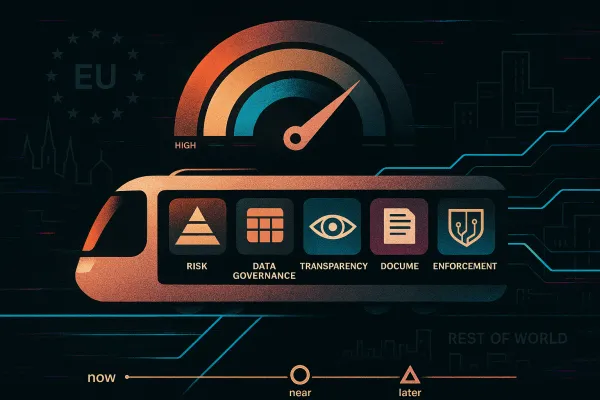
AI Law The EU AI Act Compliance Guide for Startups and AI Companies The EU AI Act introduces risk-based regulation for any startup serving EU users or enterprise customers. This guide covers risk tiers, prohibited practices, documentation requirements, and a timeline for building compliance into your product cycle.
Privacy Law COPPA Compliance in 2025: A Practical Guide for Tech, EdTech, and Kids’ Apps The 2025 COPPA final rule tightens requirements for apps and platforms collecting data from children under 13. This guide covers what changed, parental consent mechanics, data retention limits, and the enforcement risks for non-compliance.
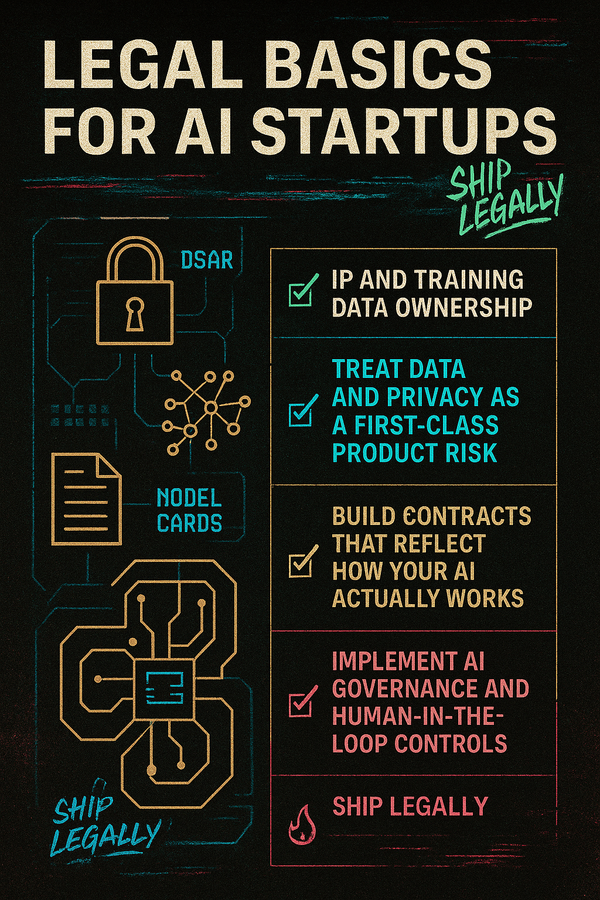
AI Law The Non-Negotiable Legal Basics for AI Startups AI startups that skip foundational legal work face IP disputes, regulatory enforcement, and deal friction. This guide covers training-data rights, model ownership, privacy compliance, vendor contract terms, and lightweight governance frameworks every AI company needs.
Digital Presence & Online Policies Why FTC Endorsement Rules Matter for Startups The FTC enforces endorsement and testimonial rules against companies of all sizes. Startups using influencer marketing or affiliate programs must comply with disclosure requirements or face fines. This guide covers what the rules require and how to build compliant practices.
Legal Tech & Automation How OAuth 2.0 Makes Gmail Integrations Safer (and Keeps Users in Control) Teams routinely connect third-party tools—n8n workflows, CRMs, AI drafting assistants—to Gmail. The security problem: people often use stored passwords or app-specific credentials. OAuth 2.0 replaces that with scoped tokens that keep users in control.
Technology, AI, & Digital Innovation The 5 Legal Moves Every AI Startup Should Make This Quarter Spend one hour this quarter on these five legal moves: inventory AI use cases, assign a governance owner, ship a minimum viable policy stack, standardize LLM vendor contracts, and build a one-page regulatory map. Each step cuts deal friction and product risk.
Startup Central Loot Boxes & the Law: A Compliance Playbook for Gaming Startups Loot boxes mix money, chance, and often minors, creating concentrated legal exposure. This playbook gives gaming founders a risk framework, jurisdictional red-flag map, product design safeguards, and a pre-launch compliance checklist to reduce legal risk.
Startup Central Protecting Culture in Small Teams: How to Run Fair, Effective Investigations Even small startups encounter misconduct reports, and how you respond matters. This guide provides an 8-step investigation checklist, interview best practices, evidence preservation steps, and clear guidance on when to involve outside counsel.
Intellectual Property & Branding Texas Quick Facts: Publicity Rights at a Glance Texas treats post-mortem publicity rights as transferable property under Chapter 26 with a 50-year term. For the living, common-law misappropriation applies. This guide covers statutes, case law, AI and deepfake considerations, and a compliance checklist.