
Intellectual Property Violations Explained: How to Identify, Respond, and Enforce Your IP
IP violations range from trademark infringement to trade-secret misappropriation and copyright claims. Each carries different enforcement mechanisms and damages. This guide explains the major categories and the legal steps startups should take to protect their IP.

Why Intellectual Property Violations Matter More Than Ever
Intellectual property (IP) includes the legal rights around your code, content, brand, inventions, and confidential know-how. For digital and AI-first companies, exposure is higher because products are easy to copy, distribution is instant, and teams routinely ingest third-party inputs (open-source packages, datasets, prompts, assets, and vendor APIs) at scale.
This guide is a practical playbook + checklist for founders, product leaders, and in-house or outside counsel supporting tech companies. The core risk is getting the response wrong: overreacting to a non-violation (wasting budget, triggering PR blowback, or making admissions) versus underreacting to real infringement that dilutes your moat.
By the end, you’ll know what counts as an IP violation, how to spot red flags, and how to respond step-by-step without making things worse — especially for brand issues like trademark classes.
What Counts as an Intellectual Property Violation?
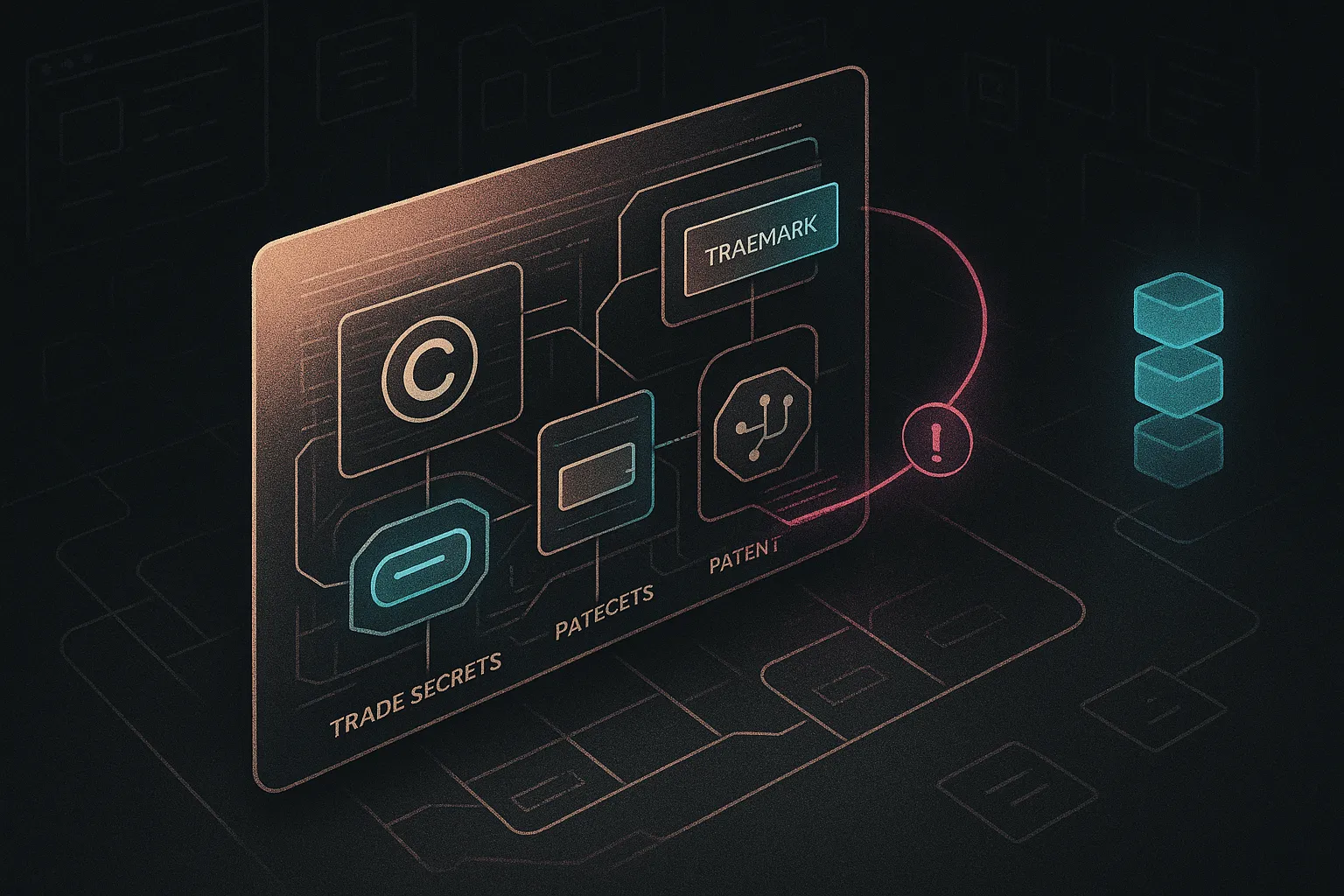
An intellectual property (IP) violation is, in plain terms, using someone else’s protected work, brand, confidential information, or invention without permission (and without a valid defense), in a way that infringes a legal right.
- Copyright: copying text, code, images, audio/video, or sometimes datasets.
- Trademark: using confusingly similar names/logos/domains (or ads) that mislead customers about source or sponsorship.
- Trade secrets: taking or using confidential information through breach of duty, hacking, or other improper means.
- Patents: making/using/selling/importing something covered by a valid patent in a specific jurisdiction.
- Contracts & licenses: exceeding license scope (common with open-source and “internal use only” data).
Not every “copycat” moment is infringement: independent creation, lawful reverse engineering, fair use/fair dealing, parody, comparative ads, and descriptive/nominative use can be lawful. For example, a competitor may bid on your brand keyword but clearly identify itself — often a monitoring issue (conversion diversion, landing-page confusion) rather than a clean trademark claim. First filter before acting: which right is actually at issue? (For brand basics, see trademark classes.)
How to Tell If Your IP Is Actually Being Violated
Use this fast diagnostic before you send a takedown or threaten suit:
- Step 1: Identify the asset (code, copy, brand, dataset, design, formula).
- Step 2: Confirm you own/control the right (assignments from employees/contractors, registrations, licenses).
- Step 3: Compare use: how similar, and is it being used commercially, as a brand, or as “internal” tech?
- Step 4: Screen defenses (license, consent, public domain, fair use/fair dealing, nominative use).
Mini-checks: copyright (substantial similarity; amount taken; transformative/commercial); trademark (likely customer confusion); trade secrets (was it actually kept confidential — NDAs, access controls, policies); patents (does their product practice each claim element); licenses (did anyone exceed scope — common with OSS; see open-source license traps for SaaS businesses).
Scenario: another app’s help-center articles look identical. Capture dated screenshots/URLs, export pages to PDF, and build side-by-side excerpts. Check authorship (repo history, CMS logs, contractor SOWs) and whether you’re seeing generic templates/common phrases versus original expression. Loop in counsel early for parody/criticism/interoperability or any plausible fair-use argument. Operationally, create an intake form: asset type, links/locations, first-seen date, suspected source, and preserved evidence.
First 24–72 Hours: What to Do Immediately When You Spot a Possible IP Violation
- Preserve evidence: screenshots, URLs, timestamps, archived pages, file copies, and source-code snapshots.
- Slow down communications: don’t contact the other side in anger — or admit facts about ownership/scope you haven’t verified.
- Confirm chain of title: employment/contractor IP assignments, outbound licenses, and any third-party components.
- Assess impact: customer confusion, lost deals, security exposure, and reputational harm.
- Classify stakes: low-stakes (random blog) vs high-stakes (competitor, core feature, large dataset).
Good evidence habits: keep work in version control, preserve repo access logs, and retain vendor email trails. If the issue is a public repo, download the relevant files and record hashes so you can later show what existed on a specific date.
Don’t: threaten via social DMs, post public callouts, file a DMCA/platform complaint on speculation, or let non-lawyers negotiate settlements over Slack without guardrails.
Assign owners: product/ops collects facts and impact; legal (or outside counsel) validates rights and drafts notices; leadership decides risk tolerance. This is the right moment to involve counsel for high-value IP, cross-border enforcement, or anything touching trade secrets.
Using Platform Tools: DMCA, Marketplace, and App Store Takedowns
For online copying, platform reporting is often the fastest lever. In the US, the DMCA creates a notice-and-takedown process for copyright; other countries and platforms have similar systems with different rules and timelines.
Common reporting targets: web hosts/CDNs, social networks, marketplaces/app stores, and developer platforms (GitHub/GitLab; npm/PyPI).
- Your contact details and authority to act.
- Identify the original work (and ownership proof where possible).
- Exact URLs/locations of infringing material.
- Good-faith statement the use isn’t authorized.
- Accuracy/perjury statement where required.
Example: your SaaS docs are mirrored on another site. Send a DMCA notice to the host and, if needed, the CDN; be ready for a counter-notice that can trigger reinstatement unless you escalate.
AI/copyright: DMCA is usually better for copies hosted online than for “training data” suspicions; focus on where the content or outputs are published. See Generative AI training, copyright, and fair use and AI, copyright, and user intent. Track every notice, response, and URL — overclaiming can create liability.
Direct Enforcement: Cease-and-Desist, Negotiation, and Litigation
Move beyond platform tools when infringement is persistent, involves high-value IP (core algorithms, flagship brand, proprietary data), or a competitor is gaining real market advantage. Typical paths include:
- Cease-and-desist: a measured, lawyer-reviewed demand that identifies the right, the infringing conduct, the fix requested, and a response deadline.
- Settlement/licensing: convert conflict into terms — removal, attribution, royalties, audit rights, and future compliance.
- Litigation/arbitration: consider when speed (injunction), deterrence, or damages justify cost, distraction, and publicity.
Mini-case: a startup spots a competitor’s app name that’s confusingly close to its registered mark. Counsel sends a firm but non-inflammatory letter proposing a rebrand timeline, app store metadata cleanup, and limited coexistence terms (e.g., no keyword ads, no similar logo).
Negotiation tips: know your BATNA, decide your real goal, and keep public statements restrained to avoid defamation/PR blowback. Cross-border enforcement often requires local counsel and jurisdiction-specific strategy. For brand fundamentals, see trademark classes.
Special Risk Areas: AI Models, Open-Source Code, and Data Misuse
Modern stacks create repeat IP failure modes: unclear rights in training data, outputs that closely mimic protected works, open-source license noncompliance (especially copyleft), and using third-party/customer data beyond “internal use only” scope.
- GPL code in a proprietary feature: rights in play are copyright + license terms. Contain by isolating/removing the component, documenting provenance, and running a repo-wide scan; fix long-term with SBOMs, automated license scanning, and engineer training (see open-source license traps for SaaS businesses).
- AI images trigger a photographer complaint: rights in play are copyright (and sometimes contract/TOS). Contain by pausing the campaign, preserving prompts/outputs, and swapping assets; fix with approved tool/vendor lists and an AI-use policy (see Generative AI training, copyright, and fair use and AI copyright & user intent).
- Confidential dataset exported to a personal environment: rights in play are trade secrets + confidentiality/data licenses. Contain with access revocation, forensic logging, and incident documentation; fix with least-privilege access, DLP controls, and clean-room/offboarding processes.
Across all three: logs, access control, and clear policies make your response faster, more credible, and less likely to escalate into litigation.
Building Systems to Prevent IP Violations (and Make Enforcement Easier)
Prevention is cheaper than emergency enforcement: it reduces accidental infringement and makes your claims stronger when someone copies you.
- Lock down ownership: employee/contractor IP assignment clauses (and moral-rights language where applicable).
- Centralize IP tracking: trademarks/patents plus unregistered assets (trade secrets, key content, datasets).
- Standardize confidentiality: NDAs and vendor/beta agreements that match how data/code is actually shared.
- Control access: least-privilege permissions and logging for repos, data warehouses, and internal docs.
- Publish policies: approved AI tools, open-source contribution rules, and third-party content sourcing.
Operationally, run periodic IP audits and license scans (see open-source license traps for SaaS businesses), monitor brand use across domains/app stores, and maintain a short internal playbook for triage and evidence preservation.
Start an IP inventory today: asset name, owner, jurisdiction, registration status, key agreements/licenses, first-use dates, and where evidence lives. Finally, make it cultural — train teams on what they can’t “just copy” from the internet, GitHub, or AI tools.
FAQs: Common Questions About Intellectual Property Violations
- What should I do if someone copies my website content? Preserve evidence (screenshots, URLs, timestamps), confirm you own the content, then consider a host/CDN takedown or a cease-and-desist. If it’s a competitor or core SEO asset, talk to counsel early.
- Can I send a DMCA takedown for AI-generated images or text? Sometimes — DMCA is best when specific copyrighted material is being hosted or reposted. “Training data” issues are harder; see Generative AI training, copyright, and fair use.
- Is it an IP violation if someone uses my brand name in Google ads? Not always; keyword bidding can be lawful if the ad clearly identifies the advertiser. Focus on actual consumer confusion, landing-page presentation, and any use of your mark in ad copy.
- How long does a DMCA takedown usually take? It varies by platform and completeness of your notice — sometimes days, sometimes longer. Be prepared for counter-notices and reinstatement.
- Is copying code from Stack Overflow or GitHub always illegal? Not always, but it’s often a license problem. Check the repo/license terms and keep provenance; for SaaS pitfalls, see open-source license traps for SaaS businesses.
- What if my contractor used infringing content in work they delivered to us? Treat it like your incident: preserve evidence, stop distribution, and remediate quickly. Then review your contractor terms (warranties/indemnities) and tighten intake checks going forward.
Actionable Next Steps
- Create/update an IP inventory: list key codebases, content, marks, datasets, patents/trade secrets; capture owner, jurisdiction, first-use dates, and supporting agreements.
- Stand up an “IP incident” intake: one form + one channel to collect URLs, screenshots, timestamps, who found it, and business impact.
- Write two playbooks: (1) DMCA/platform takedowns, (2) cease-and-desist/negotiation — each with approval thresholds and who can send what.
- Harden your paper trail: contractor/employee IP assignments, confidentiality terms, and AI + open-source usage rules (start with open-source license traps for SaaS businesses).
- Pick counsel before you need them: identify 1–2 IP lawyers (plus local counsel in key countries) for rapid escalation.
For deeper reads on AI-related copyright risk, see Generative AI training, copyright, and fair use and AI copyright & user intent. If you want help stress-testing a takedown strategy or reviewing templates, contact Promise Legal.